
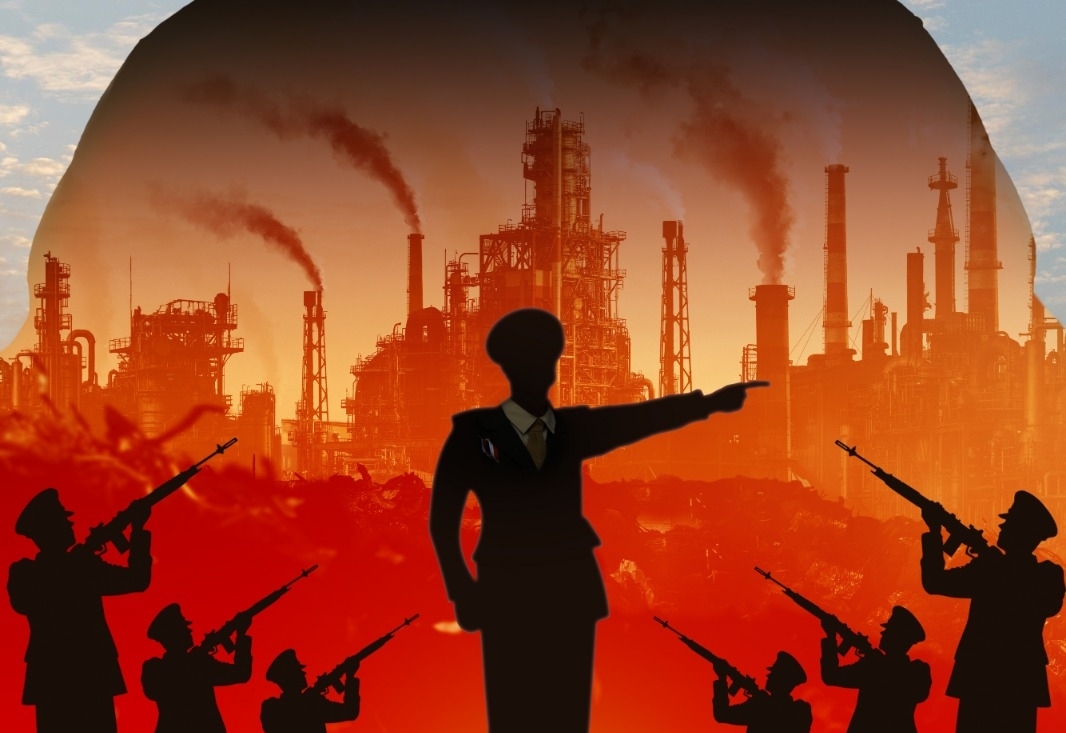
We, members of the Serbian Assembly in Diaspora, have read with significant alarm your hagiography of the Serbian president Aleksandar Vucic published in The Telegraph on 21. March.
To say that the article is misleading would be an understatement. It flies in the face of overwhelming evidence of the authoritarian, brutal, manipulative, corrupt and nationalist regime that Vucic has created in Serbia in the last thirteen years.
Lest we forget, he was the minister of propaganda for Slobodan Milosevic at the time of the NATO bombing of Serbia. He is just less suicidal and much better at PR. Your article, by its very existence, demonstrates that too.
Your sole aim is to depict Vucic as a pro-Western, pro-EU politician and not a ‘Kremlin poodle’. A different story is told by his record of more than ten years in power. Before Vucic's leadership, support for the EU was well above 50%, but it has since dropped significantly below the threshold. Under Vucic's rule, Russian influence has reached its highest level. Vucic created a media environment in which national TV stations broadcast pro-Kremlin propaganda 24/7 — propaganda that even Russian state television would be embarrassed by. When the war in Ukraine started, a magazine founded by Vucic’s associates ('Informer') ran the headline: 'Ukraine attacked Russia'. And this is only the tip of the iceberg.
In Serbia, paramilitary units made of convicted criminals assist the riot police in brutalising citizens who peacefully protest against corruption, state-sponsored crime and the hijacking of state institutions by Vucic and his party. The regime had even sponsored a terrorist action in Banjska, in Kosovo, in 2023, aiming to destabilise the region, which was condemned by both EU and USA.
Students have been beaten up and arrested. Some are even hiding from arrest abroad, as do several journalists. Unidentified plain-clothed villains have kidnapped people on the streets and taken them to unknown locations, so not even the police could have answered where they were kept.
Several policemen have swopped up to arrest a young jazz piano student protesting peacefully, sickening beatings are meted out to protesting young women, social media clips show the police bragging about beatings they have committed – as if this is some kind of a dark contest in violence – while other clips reveal sickening, frightening comments the police make about the physical properties of the female protesters. And so on…
We have seen these scenes in Latin America in the past, we may still see them in some parts of the world that stand against everything the civilised world stands for. Now we are re-living them in Serbia under the politician you have written such a glowing piece about.
You state in the piece that Vucic possesses an ‘almost yogic perseverance’, while he is widely accused, and with lots of evidence (Krik, Birn, CINS) to support it, that he sits at the top of a criminal pyramid that is one of the biggest producers and traffickers of narcotics in Europe. That is his true ‘legacy’, now that you mention it…
The collapse of the railway station canopy in Novi Sad in November 2024, which killed sixteen people, was not simply a tragic accident. It has come to symbolise the consequences of entrenched corruption and the absence of transparency in public contracting. Many major state deals involving foreign companies and governments remain shielded from public scrutiny, while allegations of corruption continue to accumulate. For example, contracts between the Serbian government and public or private companies from China, the UAE, and other countries not known for transparency or strong human rights protections are kept hidden from the public.
Serbia's economic development is largely a myth. Even within the Balkan region, Serbia lags behind in many economic parameters, not to mention Europe as a whole. Although Vucic portrays Serbia as an 'economic tiger', the economy is actually built on schemes that are collapsing before our eyes. Foreign investors, attracted by generous state subsidies, are already leaving once these incentives expire, exposing the fragility of a model that is based more on public handouts than competitiveness. The debts generated by his grandiose state projects will be shouldered by future generations, not Vucic or those who have profited from them. Meanwhile, major deals pursued with Chinese and Russian partners have increased the leverage of these powers over the Serbian state, often without transparent compliance with Serbian or European standards. The carefully cultivated image of a 'wise leader' balancing geopolitical forces may soon crumble, with consequences not only for Serbia, but for Europe as well.
You mention that media freedom in Serbia is to be envied even in developed countries, while most of the media are under the state control. Independent media freedom reports rank Serbia low, and lower by the year. All broadcasters with the national frequency are state-controlled and mercilessly pump huge amounts of brutal propaganda into society. The regime is in the process – using a British-based BC Partners company – of decapitating even the remaining few independent media with the wider coverage. After this happens, sometime this year, probably, Serbia will be in total media darkness.
Even the European Union – long cautious in its criticism of Vucic had enough of him and condemned the regime in a recent resolution using the strongest language so far.
In face of your so evidently conspicuous and glaring article, we let the above cited facts speak for themselves.
The glossy presentation of your article does not amount to serious journalism. It reads instead as a clear example of reputation laundering on behalf of a leader widely regarded as an autocrat presiding over a corrupt and captured state, and as a central source of structural instability in the Balkans.
You may have sought to present Vučić in glowing terms and as a figure of distinction, but there is no need to wait for history’s judgment: the evidence of his true nature is already plain to see, and it points to the very opposite.
If The Telegraph still values fairness and journalistic integrity, it should give space to those who have suffered under this regime, including students, journalists, and citizens who have paid the price for resisting it.
Serbian Assembly in the Diaspora
A compiled list of factual resources
Organisations and statements
- Reporteurs without Borders condemning violence
- Statement by the European Commissioner for Enlargement, Ms Marta Kos
- Statement by the Belgrade Center for Human Rights
- UN Experts Press Release, 4 August 2025; OHCHR communications: 1, 2,
- OSCE about violence against journalist
- Belgrade Center for Human Rights collection of video recordings documenting violence
- Government denies using 'sonic cannon' at Serbia protests
- Interim measure granted concerning Serbia - ECHR